

Short answer: a logo is a single mark; a brand identity is the whole visual system built around it — logo, colour, type, imagery and the rules for using them; and brand strategy is the thinking underneath both — who you’re for, what you stand for, and how you’re different. Strategy decides what the brand should say; identity decides how it looks and sounds; the logo is just one piece of the identity. Confuse the three and you end up paying for a logo when you needed a brand.
The three, in one picture
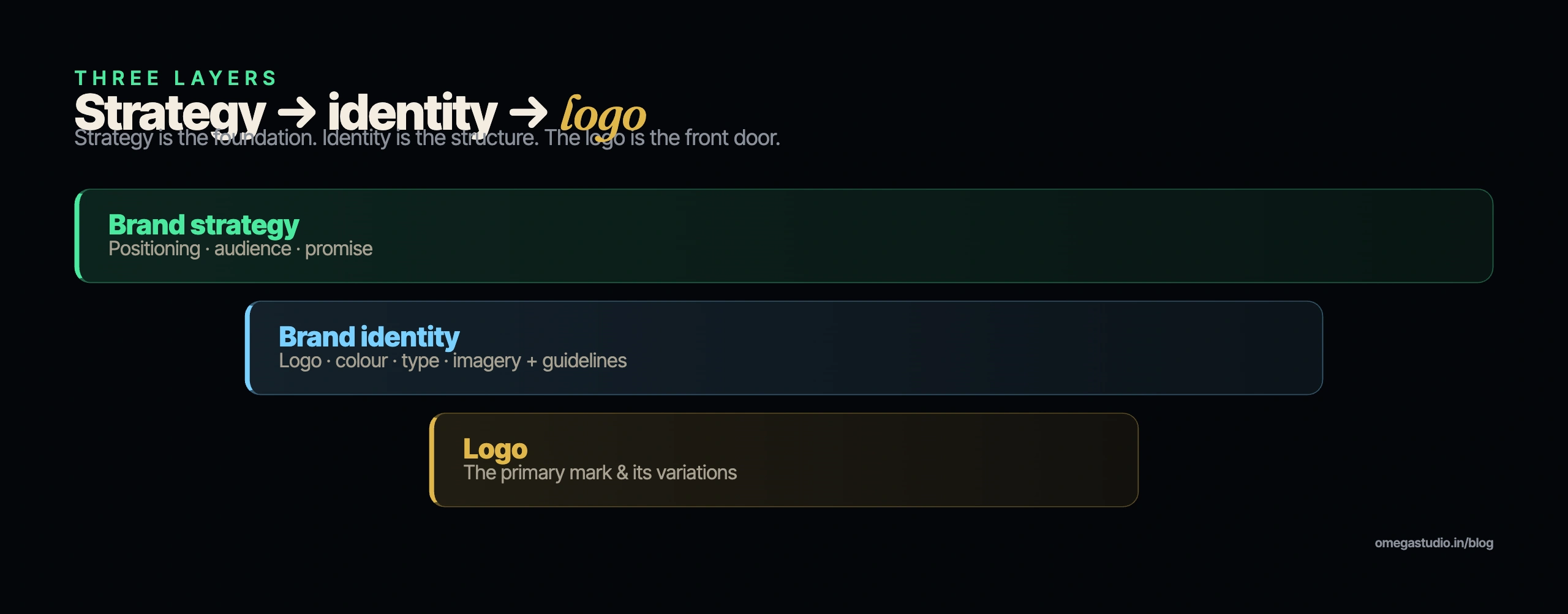
| Layer | What it is | Answers |
|---|---|---|
| Brand strategy | Positioning, audience, personality, promise | Who are we for, and why us? |
| Brand identity | Logo, colour, type, imagery, layout + guidelines | How do we look and sound? |
| Logo | The primary mark and its variations | What’s our signature? |
Think of it as a building: strategy is the foundation, identity is the structure, the logo is the front door. A beautiful door on no foundation doesn’t stand up.
Brand strategy: the thinking
Strategy is the part clients most often skip and most often regret. It’s the decisions that make everything after it easier: who exactly you serve, what you promise them, how you’re different from the alternatives, and the personality that runs through your communication. None of it is visual — but it’s what stops the design from being arbitrary.
Without strategy, design becomes a matter of taste (“I like blue”). With it, every choice has a reason (“we use a warmer palette because we’re the approachable option in a category of cold, corporate players”). That’s the difference between a look and a brand.
Brand identity: the system
Identity is where strategy becomes something you can see. A full identity includes:
- Logo system — the primary mark plus the variations you’ll actually need (horizontal, stacked, icon-only, one-colour).
- Colour palette — primary and secondary colours with exact values, and rules for where each is used.
- Typography — the typefaces and how they’re set for headings, body and detail.
- Imagery & graphics — photography style, iconography, patterns, illustration.
- Layout & tone — how it all comes together on a page, and the voice of the words.
- Guidelines — the document that keeps it consistent when other people use it.
A logo on its own can’t do this. Identity is what makes a business recognisable across a website, a deck, a shopfront and a social feed. We break down the guidelines part in what goes into a brand guidelines document.
The logo: one piece of the whole
The logo matters — it’s the signature — but it’s a small part of the identity, and an even smaller part of the brand. A logo can’t carry positioning, tone or consistency on its own. This is why a “₹999 logo” and a real brand aren’t comparable: one is a single deliverable, the other is a system built on strategy.
Why the difference costs you money
Most budget confusion comes from buying one layer and expecting another. Signs you bought the wrong layer:
- You have a logo but no rules, so every designer who touches the brand makes it look slightly different.
- You have a nice-looking identity but can’t say what makes you different from a competitor — no strategy underneath.
- You keep “refreshing the logo” when the real problem is positioning.
This maps directly onto price. A logo sits at the bottom of the range; a full identity system in the middle; strategy-led branding at the top — because it includes the thinking, not just the artwork. The full breakdown is in how much branding costs in India.
What does your business actually need?
- Just starting, testing an idea: a solid logo and basic colours/type may be enough to launch.
- Going to market seriously: a full identity system, so you look consistent everywhere.
- Competing, raising, or repositioning: strategy first, then identity — because the look should express a decision, not a preference.
If you’re not sure which layer you need, that’s exactly what a good studio should help you figure out before quoting. See our branding service, or if you’re comparing partners, how to choose a creative agency in Bangalore.
Frequently asked questions
What’s the difference between a logo and a brand identity?
A logo is a single mark. A brand identity is the whole visual system built around it — logo, colour, typography, imagery and the guidelines for using them consistently.
Is brand strategy the same as branding?
Strategy is one part of branding — the thinking (positioning, audience, personality, promise). Full branding is strategy plus the identity that expresses it.
Do I need brand strategy if I just want a logo?
Not always. For a small launch, a logo and basic identity can be enough. But if you need to stand out or reposition, strategy first makes the design meaningful rather than arbitrary.
Why does a full identity cost more than a logo?
Because it’s more work and more thinking — a system of components plus guidelines, often built on strategy, versus a single mark. See our branding cost guide for the price bands.
Can I start with a logo and add the rest later?
Yes. Many businesses start with a logo and basic identity, then build the full system and strategy as they grow.
What comes first — strategy, identity or logo?
Strategy, then identity, then the logo within it. The order of thinking stays the same: decide what to say before deciding how it looks.
Not sure which layer your business needs? Send us your brief and you’ll get a reply within 48 hours and an honest recommendation before any quote.