

Good software rarely happens by accident. A disciplined process is what keeps a build on time, on budget and aligned with what the business actually needs — turning a vague idea into something dependable.
Discovery and requirements
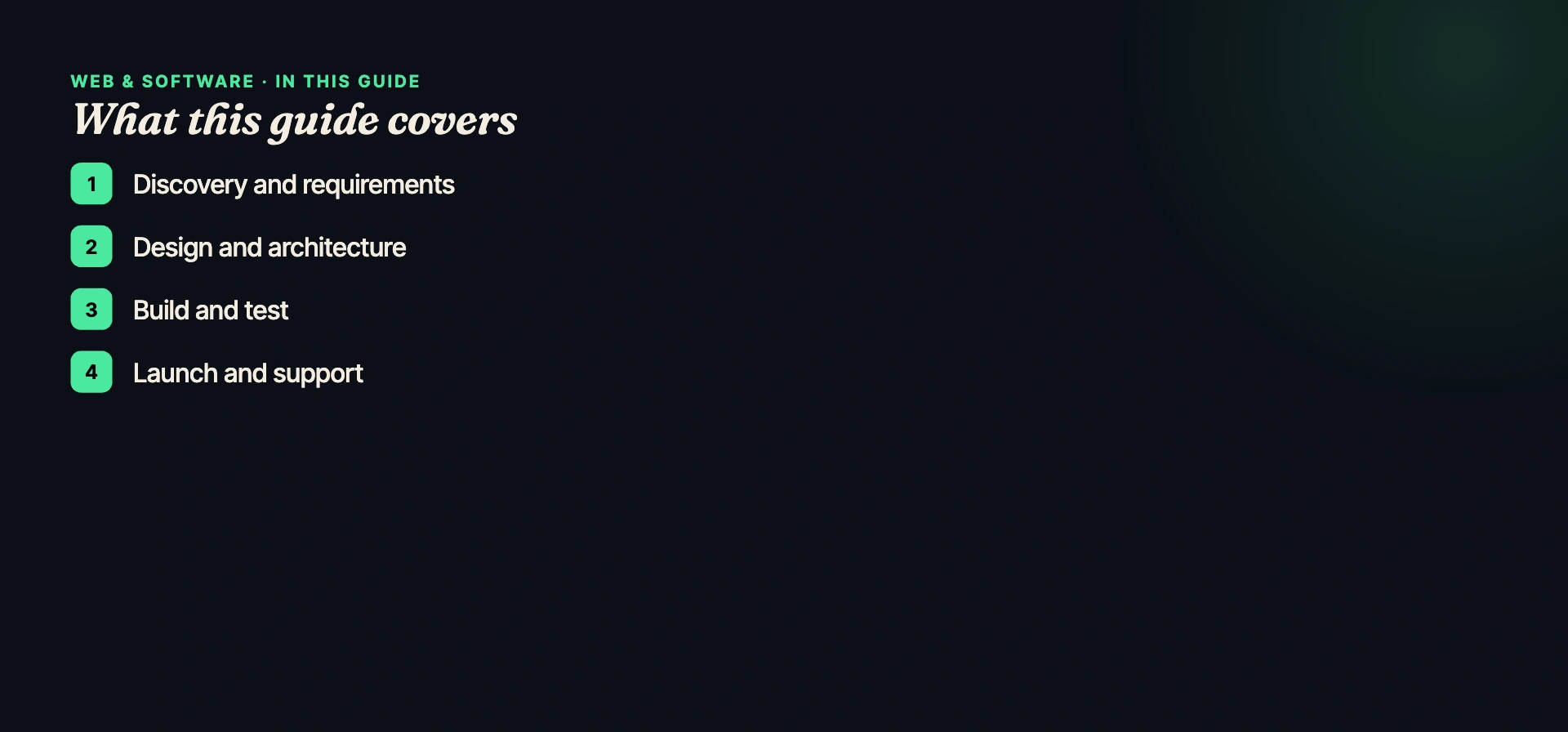
Every solid build starts by understanding the problem, not the code. We map goals, users and constraints first, so the plan solves the right thing rather than a guessed-at version of it.
Getting this stage right is what prevents expensive changes later — clarity up front is the cheapest work you will ever do.
Design and architecture
With the requirements clear, we design how the system should work and how its parts fit together, choosing an architecture that suits today and can scale tomorrow.
Thoughtful design here keeps the software maintainable and fast, and avoids the tangle that makes later features slow and risky to add.
Build and test
Development happens in focused stages, with testing built in throughout rather than bolted on at the end. You see working progress regularly instead of waiting for one big reveal.
Continuous testing catches issues while they are small and cheap to fix, which protects both the timeline and the quality of the result.
Launch and support
Launch is a milestone, not the finish line. We deploy carefully, watch how the software behaves in the real world and stay on hand for the adjustments every new system needs.
Ongoing support keeps the product secure, current and improving as your needs evolve, so it holds its value over time.
Why process matters
A clear process is really about reducing risk: fewer surprises, fewer overruns and software that does what it was meant to. It is the difference between a build you trust and one you cross your fingers over.
If you have a project in mind, we are happy to walk you through how we’d approach it before any commitment.
Frequently asked questions
How long does a software project take?
It depends on scope and complexity. We break work into clear phases and share realistic timelines up front, so you always know where the project stands.
What if our requirements change midway?
That’s normal, and a good process expects it. Working in stages lets us absorb changes deliberately rather than derailing the whole build.
Do we own the code at the end?
Yes. You own the software, the code and the documentation at handover, with no lock-in.
Ready to get started? Send us your brief and we’ll reply within 48 hours — or explore our web & software services.