

Short answer: the branding mistakes that cost Indian businesses the most aren’t bad taste — they’re skipping strategy, buying a logo and calling it a brand, chasing trends, being inconsistent, copying competitors, and having no guidelines. Each one quietly makes every future rupee of marketing work less hard. Avoiding them is mostly about sequence and discipline, not budget.
The mistakes that actually hurt
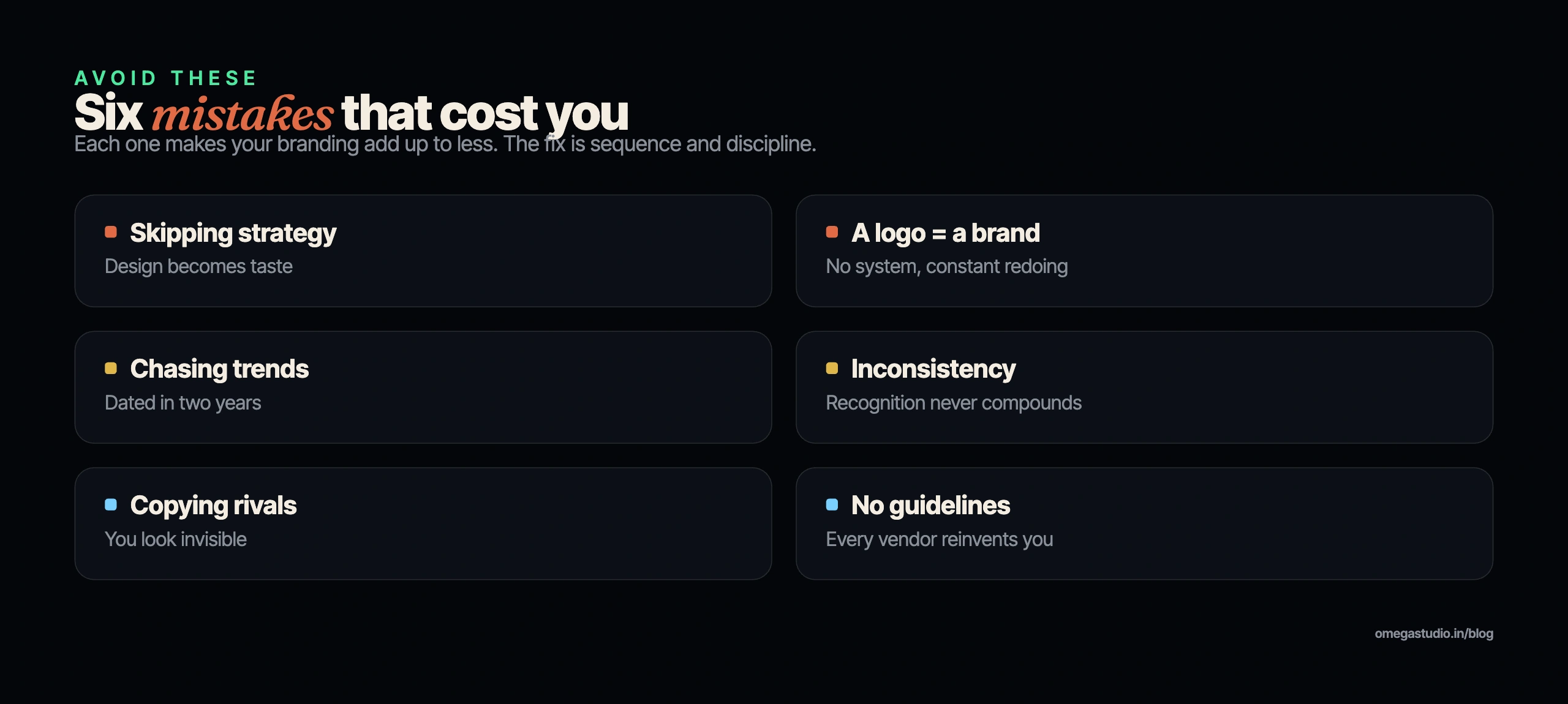
| Mistake | What it costs you | Do instead |
|---|---|---|
| Skipping strategy | Design becomes taste; nothing means anything | Decide positioning and audience before design |
| “A logo = a brand” | No system, no consistency, constant redoing | Buy an identity system, not just a mark |
| Chasing trends | Dated in two years; a costly redo | Design for longevity, not this year’s look |
| Inconsistency | The brand never compounds recognition | Use guidelines everywhere, every time |
| Copying competitors | You look like everyone else — invisible | Find your own angle and own it |
| No guidelines | Every new vendor reinvents your brand | Document the rules once, reuse forever |
1. Skipping the strategy
The most expensive mistake happens before any design: not deciding who you’re for and why you’re different. Skip it and design becomes a matter of taste, revisions never end because there’s no agreed reason for anything, and the result looks fine but says nothing. Strategy is what makes the rest efficient.
2. Treating a logo as a brand
A ₹999 logo is a mark, not a brand. Businesses that buy one and stop end up with no colour system, no type rules and no consistency — so every touchpoint looks slightly different and the brand never adds up. A logo is one piece of an identity, which is one expression of a strategy. We unpack that in logo vs identity vs strategy.
3. Chasing trends
Trend-led branding looks current for a season and dated soon after — and dated means a redo you’ll pay for again. The strongest Indian brands lean on clarity and distinctiveness that age well, not on this year’s gradient. Design for the next five years, not the next five months.
4. Inconsistency
Brands compound: every time someone sees the same colours, type and tone, recognition grows. Inconsistency resets that counter. The fix isn’t more design — it’s discipline and a set of guidelines that everyone actually uses. We cover what those contain in what goes into a brand guidelines document.
5. Copying competitors
It’s tempting to look like the category leader, but a brand’s whole job is to be distinguishable. If you look like everyone else, you’re invisible — and you’ve handed the advantage to the brand you copied. Find the thing only you can say, and build the look around that.
6. No guidelines, no ownership
Two quiet mistakes that surface later: no brand guidelines, so every freelancer and printer reinvents your brand; and not getting the source files, so you can’t actually use or extend what you paid for. Fix both up front — insist on guidelines and on owning the files at handover. It’s one of the checks in how to choose a creative agency in Bangalore.
The pattern behind all six
Every mistake here comes from treating branding as a one-off purchase instead of a system built in the right order: strategy, then identity, then consistent application with guidelines you own. Get the sequence right and the individual choices get easier — and cheaper over time.
Build it right with Omega Studio
Omega Studio runs branding in that order — strategy where it’s needed, a full identity system, guidelines and source files you own — so you avoid the redo cycle these mistakes cause. See our branding service, and for what it should cost, how much branding costs in India.
Frequently asked questions
What is the most common branding mistake?
Skipping strategy — starting design before deciding who you’re for and why you’re different. It makes everything after it slower, more subjective and less effective.
Is buying a cheap logo a mistake?
Only if you treat it as a whole brand. A cheap logo is fine as a mark for a small launch, but without a colour system, type rules and guidelines it can’t keep you consistent.
Why is brand consistency so important?
Because recognition compounds — repeated exposure to the same look and tone builds familiarity and trust. Inconsistency resets that, so your marketing works less hard.
Should my branding follow current design trends?
Sparingly. Trend-led branding dates quickly and forces a costly redo. Design for longevity and distinctiveness instead.
Do I need brand guidelines as a small business?
As soon as more than one person makes something with your brand, yes — guidelines are what keep it consistent and stop every new vendor reinventing it.
How do I avoid these branding mistakes?
Work in the right order: strategy, then identity, then consistent application with guidelines you own — and insist on owning the source files at handover.
Want branding done in the right order, once? Send us your brief and you’ll get a reply within 48 hours and a scoped proposal within five working days.